Pages

Showing posts with label History. Show all posts

Tuesday, March 31, 2015

The Last Palace of the Last Tsar

Tsar Nicholas II28 May. Monday. [1918]
A very warm day. They are constantly opening boxes in the barn where our things are located and taking out various objects and provisions from Tobolsk. And that, with no explanation of the reasons. All this makes one think that things that are liked can easily be taken to [someone's] homes, which means gone for us! Disgusting!

The external relations have also changed in the past few weeks: the jailers are trying not to talk to us, as if they feel guilty, and it feels like they have some anxiety or are afraid of something. Confusing!

***

21 June. Thursday. [1918]
There was a change of commandants today -- during dinner Beloborodov and other came in and announced that instead of Avdeyev, the one whom we mistook for a doctor has been appointed -- Yurovsky.

During the day before tea, he and his assistants catalogued the gold jewelry -- ours and the children's; the majority that it was because there was an unpleasant incident in our house, mentioned our missing things. So the conviction about which I wrote on 28 May had been confirmed.

I feel sorry for Avdeyev, it is not his fault that he was not able to hold back his people from stealing from the chests in the barn.


Twenty six days after his final diary entry (above), Nicholas, along with his family and remaining staff, would but ushered down to the basement of the Ipatiev House in the dead of night. By the next morning all of them would be dead.

The name of the House of Special Purpose was identical to the Ipatiev Monastery in Kostroma, where the Romanovs came to the throne. Not many photographs of the house exists, and very few or none exist of it before the deaths of the Romanovs. The house itself was demolished in July of 1977, after being declared of "not enough historical importance." The government was embarrassed by the amount of people visiting to pay their respects to the Romanovs, and had it destroyed. This did not, however, stop people from coming. Sometimes they would sneak out at night, and lay tribute on the now empty lot. It was after the Soviet state fell that the Church on the Blood was built where the Ipatiev House used to stand, and it's now a major place of pilgrimage.

Luckily I have been able to find many photos of the Ipatiev House, all taken after the Romanov's were killed (at least I presume there were. It is possible, however unlikely, that some were taken before their deaths).

Ipatiev house, drawing room
Drawing room
Ipatiev house, dining room
Dining room
Shots of the house in which the Romanov Family was murdered in 1918 (Ipatiev House, Ekaterinberg)
A hallway
Grand Duchesses' bedroom, Ipatiev house photos (interior & exterior)
Olga, Tatiana, Maria, and Anastasia's bedroom


Ipatiev house, Nichlas, Alexei, and Alexandra's bedroom
Nicholas, Alexandra, and Alexei's bedroom


Shots of the house in which the Romanov Family was murdered in 1918 (Ipatiev House, Ekaterinberg)
Stair, leading to who knows where

Ipatiev house, stairs to ground floor
Stairs to the ground floor


Ipatiev house, art in NA&A bedroom wall
Art from Nicholas, Alexandra, and Alexei's room


Ipatiev house, basement where the Romanovs were killed
Basement


Ipatiev house, drawing room
Drawing room


While doing my research on the Romanovs I discovered an old forum, where people had discussed the Ipatiev House, gathering photos and making speculations. It seems throughout the house there was some written graffiti, and in the basement in particular there was writing that some believed to be a clue of some kind.

The letters "syl" are written on the wall, and another fain letter before the "s" that could either be a "v" or possible an "m." Now you've got to remember, if it means anything than it'd mean something in Russian. So for someone like me, I can go trying to guess a word that it could be. Thank goodness for the people on this forum, who had some interesting ideas. It seemed to make most sense that it was written backwards, which would mean it was "lysv" or "lysm." Could it be initials? A word? A sign? Nobody will ever know for certain.

If the missing letter was in fact an "m" then if might be spelling Lysma, which means Flame. That was the name of Lenin's special unit of executioners. One of the users, Penny, made an interesting post which explains rather nicely why those letters may have been put there:

"...Then one day, Greg had the History Channel on the television, and on came a documentary about the Siege of Sidney Street, a failed burglary attempt in London's East End in 1910. The crime was carried out by a group of Latvians, all of whom belonged to a revolutionary organization called "Lysma," meaning "The Flame."
"Subsequent investigation turned up evidence that showed Lysma was fairly closely tied to the exiled Russian revolutionaries in London -- even attending secret meetings with prominent Bolsheviks -- and, indeed, throughout many European cities. 
Ipatiev house, basement wall
The writing on the wall in the basement
"Long story short, Lysma was still heavily active in 1918, especially in Russia, where the Latvian revolutionaries were busily out-fiercing many of the Bolsheviks. Lenin himself was surrounded by a Latvian Guard, they being considered more dedicated and reliable in the revolutionary cause than most Russian regiments.
"It may also be remembered that Yurovsky brought several Latvians and Baltic Letts into the house with him, and these men used the murder room as a dormitory until the night of the murder. It seemed most likely to Greg and I that this inscription was placed there by an off-duty Latvian guard, tagging the room with the name of his own revolutionary organization. There were several other pieces of graffiti in the room -- and indeed, throughout the house -- not only this one and the Belshazzar one. The initial investigators believed that they were merely the off-duty artwork of bored guards."

In my opinion that theory wraps up the origin of the letters rather nicely, though if a time machine existed then it could be proven once and for all. Ah, maybe in another couple hundred years.

It does seem like their explanation wraps it all up nicely, but wait. There's more. While it does seem a little far fetched, there's this little beautify to ponder. Yurovsky's 1920's testimony in the book The Fall of the Romanovs page 365 mentions "Lysev":

Yurovsky: "I left with a report for Moscow on the night of the 19th. It was then that I gave the valuables to Trifonov, member of the Third Army's Revolutionary Council. I think Beloborodov, Novoselov, and someone else buried them in a basement in the earthen floor of a worker's house in Lysev."
Not all the "valuables" were taken to Mosocw for some reason. Yurovsky gave some of the IF [Imperial Family] "valuables" to Trifonov who in turn give them to Beloborodov, Novoselov and another. These "valuables" were said to have been buried in the village of Lysev in the basement of one of the "worker's house".

I think it should be noted that the basement mentioned above is not talking about the basement of the Ipatiev House. It does rather just make the whole writing on the wall all the more confusing, wouldn't you say?

Finally I have to address more writing on the wall in the Ipatiev House before this post is through. I have no idea where in the house this was written, but it would seem that it's from a German poem, written by Heinrich Heine.

Iaptiev House, basement wallpaper -- From a poem in German by Heinrich Heine: "Belsatzar ward in selbiger Nacht Von seinen Knechten umgebracht." It's a reference to a story in the Old Testament book of Daniel. In translation: "On the same night Belshazzar Was killed by his own slaves." The name "Belsazar" in the original was altered to "Belsatzar" in the Ipatiev house graffiti as a deliberate pun on the word "tzar."
"Belsatzar ward in selbiger Nacht Von seinen Knechten umgebracht"
It's a reference to a story in the Old Testament book of Daniel. In translation: "On the same night Belshazzar was killed by his own slaves." The name Belsazar" in the original was altered to "Belsatzar" in the Ipatiev house graffiti as a deliberate pun on the word "tzar." Seems the Bolsheviks had a crude sense of humor.

Thursday, February 5, 2015

Château de Versailles

The Main Palace at Versailles #MarieAntoinette.. Stunning.. A must see in Paris. Quick tip! If there is a long line and there usually is, go round the gardens first. Then inside won't be as busy and you will be able to see more. This is a full days trip as there is so much to see. << Good to know, since I want to visit Versilles someday
Versailles
It was May 6th, 1682, when Château de Versilles first opened their doors. Decades of work went into the palace, where French Royalty would reside until forced to leave due to the French Revolution in 1789. The entire castle is fifty one thousand square meters and has two thousand one hundred and fifty three windows and sixty seven staircases. Construction cost approximately 116,438,892 Livres, which today would amount to right around two billion dollars. That's an insane amount of money. The extravagance did not stop in the buildings though; Versailles has nearly two thousand acres of gardens, structured in the French Garden style. For a palace that large there would be many people involved in designing and building. While this is true for Versailles, the château and more particularly the royal stables, are considered to be Jules Hardoin-Mansart's masterpiece (you go Jules!).

You may see Versailles reference to as both a castle, and a palace; this is because both terms are true. I'm going to be honest, I though that the terms castle and palace were pretty much the same. Turns out they have their differences. A castle is a fortified building, or series of buildings in some cases, designed to withstand enemy attacks. So you'd be better off in a castle during war. A palace is meant more for luxury and leisure. Something to impress guests with, which let's face it, Versailles is all about impressing people. All in all, Versailles seems like the best place to be, seeing as it's both a castle and a palace.
Versailles. Hall of Mirrors.
The Hall of Mirrors

Not that I've ever been (yet) but The Hall of Mirrors would have to be my personal favorite room in the entire palace. Originally it was known as simply The Great Hall, or in French, 'Grande Galerie'.  It was first an outdoor terrace, but was later converted into an incredible indoor space to showcase one of Louis XIV's most prized collections, which would be his sculptures of antiquity. He got to collect expensive statues, while I collect worthless bottles. Oh, the life of a royal.

On especially grand occasions, such as Marie Antoinette's wedding I would imagine, every candle would be lit, their light bouncing off the three hundred and fifty seven mirrors around the room, transforming the Hall of Mirrors into a magnificent corridor of light. In all there are 43 chandeliers made of pure silver, seventeen large ones, and twenty six small. I've looked high and low, but I cannot find a definite amount on how many candles each chandelier can hold. Some say one thousand, one crazy sounding one said ten thousand, and just looking at the picture it looks more like fifteen or twenty, so maybe they were referring to the total candles in the room. Either way, that much light bouncing off the walls would be a truly breathtaking sight. I wonder how it would appear from the outside, looking through the seventeen glass doors looking into the Grande Galerie.

The attic above the Hall of Mirrors at Versailles. Photography byChristian Milet.
Attic above the Hall of Mirrors
You might wonder what prompted the idea of such a room. The candles used to light rooms, back before light bulbs were invented, would emit smoke and that would damage the walls over time. To help preserve Versailles, rooms were dimly lit, and mirrors were used to focus light and spread it without using as many candles. As beautiful as it is, The Hall of Mirrors is more than just a showcase room though. Important events such as the signing of The Treaty of Versailles took place within the long halls of the Grande Galerie. It's also the room that, almost five decades earlier, Germany had declared itself an empire.

Next we have The Queen's Apartments, which are are made up of five different rooms, The Queen's Bedchamber, The Queen's Private Cabinets, The Room of the Queen's Gentlemen, The Queen's Antechamber, and The Room of the Queen's Guard; the main room being The Queen's Bedchamber.

The ceiling of the Queen's Bedchamber dates back to the days of Maria Theresa, Louis XIV's Spanish queen, for whom the room was designed for. The paintings by François Boucher and the wooden panels were later made for Marie Leszczyńska. Only the furniture and fireplace were upgraded for the last Queen of France, Marie Antoinette.

Marie Antoinette's Bedroom at Versailles
The Queen's Bedchamber
Nineteen royal children were born in the Queen's Bedchamber, the room where the queens spent a large amount of their time. It's where they slept, and received visitors in the morning, and the place they preformed their toilette. This ceremony, the toilette, is where the queen would rise each morning, and be dressed and get ready for the day in full view of a large group of courtiers and noble women. The same ceremony happened with the king, dauphins and dauphines. Similar ceremonies include spectators watching the royal family dine each meal, and the birth of a royal, which was a public event where everyone would cram into the Queen's Bedchamber to watch the queen give birth (though after Marie Antoinette's first child, she broke this etiquette for the rest of her children's births). Hence the balustrade, to keep everyone back.

In October 1789 rioters stormed the palace. Marie Antoinette fled through a secret door to the left of the bed, the passage leading to the Queen's Private Cabinets and the Kings Apartment. The rioters did not loot the palace during the French Revolution, but after items were sold at an auction that lasted a year. Over time the original furniture has been recovered, and is now on display in Versailles. It took over thirty years of work to restore The Queen's Bedchamber. The original Schwerdfeger jewel case and the firescreen were eventually returned to the room. Other items have been replaced with equivalents. The fabric on the walls and bed was rewoven from cartoons of the period. The bed and balustrade were rebuilt from documents in the archives. All of this required tedious research and delicate reconstruction. Even the 1745 Baillou and Crescent clock Marie Antoinette placed in the bedchamber has been restored to it's place. Other items returned to the room include Sené's chimney piece and the bedspread by Desfarges. Some of the original furniture (already mentioned) has been recovered including the andirons by Boizot and Thomire. Other items have been replaced with facsimiles: armchairs by Tilliard and folding stools taken from the suite of rooms belonging to the Countess d'Artois. The Savonnerie carpet was rewoven from documents.

Areal view of the Gardens of Versailles
Versailles extravagance and beauty did not stop inside the castle, but continued in the enormous gardens. There are two hundred thousand trees and two hundred and ten thousand flowers planted every year. As I said before, Versailles has nearly two thousand acres of gardens. Among all the greenery, there are fifty fountains with six hundred and twenty jets of water. Apparent Lousis XIV had a love for fountains, and they're great to entertain the guests. It cost around a third of the entire buildings budget to keep the water supply running, and many of the fountains still use the same network of hydraulics that was built by the royal family.


Versailles Fountains
Fountains in the Garden of Versailles
At some stages, Louis XIV put more focus on the Garden of Versailles than the château itself. There's a clear theme in the gardens, with a specific focus on the sun god, Apollo, and other solar imagery as well. This was because Louis related himself with the sun, and was commonly known as the Sun King. The Gardens of Versailles's design would remain the same, until the eighteenth century.

After the French Revolution, some of the gardens trees were cut down, on order from the reigning National Convention. Some prominent people sensed a potential threat to Versailles, since is has strong links to the monarchy the revolution sought to destroy, so they convinced the National Convention to open the gardens for the public instead of destroying it. Luckily the suggestion was accepted, which likely saved the Gardens of Versailles from destruction.

In conclusion, Versailles is a place full of fantastic history, and this post only barely touches the surface of this historic monument.

Monday, January 26, 2015

Peter Carl Fabergé


One thing I've seen speckled throughout the history of the Romanovs are the famous 'Imperial' Fabergé Eggs. The tradition first started with Tsar Aledander III, and continued to Nicholas II.

Each Easter Nicholas would order two eggs, each equally special and beautiful. One he would send to his mother, Maria Feodorovna, and the other he would present to his wife, Alexandra Feodorovna. Each egg would have a hidden button, and when pressed the egg would then open to reveal a secret compartment with a surprise inside.

The House of Fabergé made roughly 50 eggs total, though only 43 of them survived. There were two more planned for the Easter of 1918, but due to the Russian Revolution, were never made nor delivered.

First let's talk about the Mosaic Egg, one of my personal favorites. Under the supervision of Peter Carl Fabergé, Albert Holmström built the Mosaic Egg, which Tsar Nicholas II presented to his wife the Easter of 1914. The floral tapestry pattern was designed by Alma Theresia Pihl, who I read was inspired by needlework fire screens found in aristocratic sitting rooms of the time. The egg, pictured above, is 9 cm tall and was created using a variation of gold, platinum, diamonds, rose-cut diamonds, ruby, emerald, topaz, sapphire, garnet, half-pearls, moonstone, white enamel, and opaque enamel.

The surprise inside is a removable miniature frame with profiles of the Tsar's children (Olga, Tatiana, Maria, Anastasia, and Alexei) in a cameo brooch style. The back of the frame is enameled with a sepia basket of flowers; the basket is bordered with the year 1914 and the names of each of the Romanov children. The current owner of the Mosaic Egg is Elizabeth II.


In Easter, 1915, Nicholas presented the Imperial Red Cross Egg to his mother Dowager Empress Maria Fedorovna. Also under the supervision of Peter Carl, Henrik Wigström created this egg. It's made of silver, with the shell covered by bands, edged in gold. Each band has a different guilloche pattern, a decorative engraving technique, and is covered in white enamel. The two red crosses are made of enamel and are on either side of the egg. One includes the date "1914" as can be seen in the picture on the right, and the other "1915." Inscribed on the outside of the egg are the words, "Greater Love hath no man than this, to lay down his life for his friends." The monogram of the Dowager Empress is displayed on the top of the shell.


This egg's surprise is a folding screen of five miniature portraits, all women from the House of Romanov. Each is wearing their Red Cross nurse uniform, as possibly painted by Vasily Ivanovich Zuiev (active with Fabergé from 1903-1918). The portraits are of the Grand Duchess Olga Aledandrovna of Russia, Nicholas II's sister, Grand Duchess Olga Nikolaevna of Russia, his eldest daughter, Tsarina Alexandra Feodorovna, Grand Duchess Tatiana Nikolaevna of Russia, the Tsar's second daughter, and the Granch Duchess Maria Pavlovna, the Tsar's first cousin.

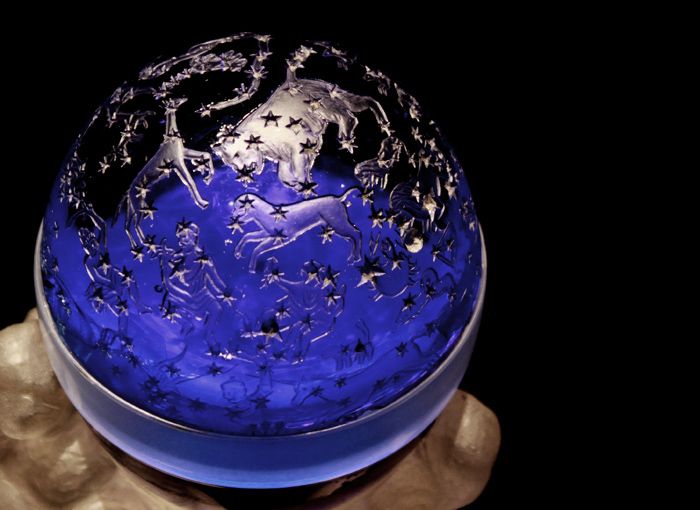
The Constellation Egg - It was the last Fabergé egg made.   Due to the Russian Revolution of 1917, the egg was never finished.       The egg, as it is known from 1917 document, was made of blue glass with a crystal base, and the Leo sign of the zodiac is engraved on the glass. (The heir to the Russian throne, Alexei Nikolaevich, Tsarevich of Russia, was a Leo). There are stars that are marked by diamonds, and there is a clock mechanism inside the egg.Each portrait is painted on ivory, and is situated in a mother-of-pearl and gold screen that folds to fit inside the egg, which is lined in velvet to protect and secure the folded frame. On the back of each portrait is a golden monogram of the sitter.

Lastly for today we have the Constellation Egg, which is one of two designed under the supervision of Peter Carl in 1917 for the last Tsar of Russia. It was the last Fabergé egg designed. It remains unfinished.

The egg was ordered for Alexandra Feodorovna, but of course never got the change to be presented to her. As known from a 1917 document, the Constellation Egg was made of blue glass with a crystal base, and the Leo sign of the zodiac is engraved on the glass (Alexei Nikolaevich was a Leo). There are stars that are marked by diamonds; inside is a clock mechanism.

Apparently in 2001, a similar item was discovered in the Fersman Mineralogical Museum in Moscow, and experts believe it to be an unfinished egg made by Fabergé. It's an unfinished item, without diamonds. The inspiration for the egg, a clock by Augustin Pajou, the Parisian Neoclassical sculptor, has been identified by Kieran McCarthy of Wartski, London.

Meanwhile Russian millionaire Alexander Ivanoc claims that he owns the original (and finished) egg. In 2003-2004 he said that he acquired this egg in the late 1990's and affirms that "the Fersman Museum erroneously continues to claim that it has the original egg. Experts and their research clearly supports the Alexander Ivanov's egg as genuine." Russian museum authorities considered this as nonsense and fake. His egg is now in the Faberge Museum in Baden-Baden, which houses part of his Fabergé collection.


Friday, January 9, 2015

Dear Queen Bess

You know what I love? Cameras. It's exhilarating to be able to take a glance at history through the lens of a camera. Sadly they weren't invented until sometime during the first half of the nineteenth century, so for the majority of our history we only have paintings and what artifacts we can find to go on. Think about it, no one knows what King Henry VIII or Elizabeth I really look like. We only have their paintings to go off of, and let's face it, they aren't always as lifelike as artists are today. Doesn't that just make you want to jump in a time machine? Well, maybe not, but it makes me want to.

Luckily cameras are not the only way to document history. We may not have photographs of any of the Tudors, but we've got a bunch of other things. I think you're figuring out what this post is about now. Yup, it's about the Tudors. Now, I generalize, but usually when I say the tutors it's referring to Elizabeth I and the people she knew during her life.

Now the 1500's were a long time ago, but luckily quite a bit has survived from the era. For instance, the dress pictured in the right. It was Elizabeth's christening gown, sewn and embroidered by her mother Anne Boleyn. Or so it's thought to be. Recent findings say it might actually have been made in the seventeenth century.

Here's a fun one. Elizabeth I's coronation dress. Here's the problem though; there was a movie in which they remade the coronation dress pictured below. Yet I read (from a completely unreliable source mind you) that her dress survived, and that the other photo below is the actual dress. So I can neither confirm nor deny if it's real, though I'm leaning towards it being fake.

The actual coronation gown of Queen Elizabeth I.  It is amazing it survived the English Civil War and Cromwell's wrath.  Most of Elizabeth's royal jewels and regalia were melted down or destroyed.Coronation portrait - 1600 copy of 1558 original (National Portrait Gallery, London) This is a 1600 copy of a portrait painted of 25-year old Elizabeth Tudor in her coronation robes with her regalia.

You know, this post just couldn't be complete without my favorite picture of Elizabeth that I've discovered so far. Now in my mind their fashion was a bit odd, but I think that her dress in the painting is very pretty. Well, except maybe the sleeves. The inside is a bit poofy, which isn't really my thing, but of course I'm not the one wearing the dress. You know, if I went back in time, no matter how I would try to prepare myself, I'd probably still be shocked by how skinny people would be. I mean they used corsets to make themselves insanely thin, which is just bizarre to think about since people these days don't use them. Thank goodness for that too. Corsets actually deformed their chests after a time (I mean, they started wearing them around the age of ten or twelve I'm pretty sure).


I wonder why exactly Elizabeth chose not to marry. Granted, after living with a father who had six wives (two of which were beheaded) why would she? But I've always kind of wondered if that was the exact, or only, reason for her staying single.

Once I read this completely nutty theory that Elizabeth Tudor was in fact, a boy! They claimed that the real Elizabeth died, and the house staff got a scrawny boy from the village nearby, dressed him up in women's clothes, and they passed him off as Elizabeth. Crazy, I know. Though they did have a few interesting bits of "proof." Like Elizabeth's famous quote, "I know I have the body of a weak and feeble woman, but I have the heart and stomach of a king, and a king of England too." They claimed that the fake Elizabeth was referring to his disguise as a woman, but that he did in fact have a mans heart. They also claimed this is why Elizabeth remained a virgin. I think it's complete poppy cock.

You know, when it comes to Henry VIII's wives, I remember I used to always have the hardest time remembering what order he married them in. For some reason I always mixed up Anne of Cleves and Catherine Howard. But on the cover of a book about Catherine Parr (his last wife) it had this nice little trick. If you can at least remember the fate of each wife, then you'll be good. It read: Divorced, beheaded, died, divorced, beheaded, survived. That sticks in my head really well for some reason, so now I never seem to mix them up.

Wednesday, January 7, 2015

Like Magic Childhood Dreams . . .

Olga Nikolaievna Romanova, Grand Duchess of Imperial Russia. Court dress, 1913Tuesday. 2nd June [1915]
At 2 1/2 went to the graveyard with Mama. . . . Picked T. at 3 o'cl. and went to the Grand Palace, upstairs to Mama's warehouse (surgical department). At 4 hrs 20 min, we 2 with Papa to the city. Darling Sh. met us. Had tea at Grandma's. Came home at 7 o'cl. went to Pavlovsk for the panikhida for poor Uncle Kostya, he passed away at 6 1/2. Sat with all of them and for a little while with Elena, who did not feel well and [was] lying down [illegible] on the couch. Around 11 o'cl. to bed. Lord save us.

Above is a diary entry from Olga Nikolaevna Romanov's diary. Since it's translated from Russian (at least I think it was Russian) the wording is a little rough around the edges. As you may have guessed, I took this entry from the book I got for Christmas, The Diary of Olga Romanov by Helen Azar. Throughout the whole book are entries from her father, Nicholas's, diary, letters from Olga to to her father (as well as a few others), memoirs from V. I. Chebotareva, Alexader Kerensky, and Anna Vyrubova. Basically if you're interested in the last royal family of Russia, this book is a little gold mine.

The entire imperial family kept diaries, they also took lots of photos, so theirs is a story that's easy to follow. Until the end of course. The ever present rumors of one of the grand duchesses having survived the mass murder of their family and friends is a mystery that will probably never be solved for sure. As of the moment I have no idea where I stand, but recent research is bringing me to strongly consider that Anna Anderson was in fact Anastasia Nikolaevna. But that's not what this post is about.

In the past I've done most my research on Anastasia, being intrigued by her story of possible survival. It's a mystery story most anyone would be interested in. But after discovering Olga's diary, I became interested in her story too. During the war she was a nurse, and helped care for wounded soldiers. A few times in her diary she wrote about her crushes, or attachments she'd made to the wounded soldiers in her hospitals, as well as just recording simple events in her life. While Anastasia, along with her older sister Maria, did sponsor hospitals and visit the wounded, they were not allowed to actually become nurses like their older sisters.

Romanovs, their portraits and signatures.Random fact: The entire family read A Study in Scarlet by Sir Arthur Conan Doyle. I don't know why, but that it just kind of cool to me.

In The Diary of Olga Romanov, a midst the diary entries and memoirs, there is a letter, written by a wounded officer February 21, 1916. He was very grateful for the visits from the Tsar's children, as written below.

I was a patient at the infirmary the entire April of 1916. The white nurses [nurses in white?] and kind doctors I thank very much. . . .

"When the Tsar's children came to visit,
It became easier to breathe for all,
The suffering suddenly went away
From us ailing soldiers,
And even in our future anguish,
Perhaps already grey haired,
We will remember these visits,
Like magic childhood dreams . . ."
Your Imperial Majesty's Hussar, Posadnoy. 21/II/1916


***

15th March. Wednesday. [1917]
On the 23rd [February] at breakfast got sick with measles- was put to bed. Aleksei [got sick] during the day, and Anya too. The ear[ache] went away slowly. The next day Tat.[iana] got sick, [we] lay down together. Al. came by during the day in his bed-- it was dark. My T° reached 40,3. Mama is with us all the time. Shvybz got sick on the 2nd [of] M.[arch]-- Maria [on] the 7th. On the 27th or 28th Febr. Lili Dehn arrived here and is still living in the Red Room.

That is the last diary entry Olga made in her diary. It's unknown why she stopped writing, though she did continue to write letters to people while imprisoned.

Thursday, December 11, 2014

Maria Antonia Josepha (Josephina) Johanna; What a Name!

Marie-Antoinette par Elisabeth Vigée-Lebrun - 1783.jpg
Maria Antoinette, Queen of France and
 Navarre, by Louise Èlisabeth Vigée Le
Brun, c. 1779.
Famously tragic. I think that's the best and shortest way to describe Marie Antoinette. Though her fate cannot be blamed entirely on her, or any one person in my opinion.

To start off, Marie Antoinette was not always know by such a grand name. As a child she was Maria Antonia Josepha Johanna, so as of the moment I'm not entire sure where the name Marie Antoinette even came from. I'll have to do more digging to find out.

Antonia, as she was known, was born on November 2nd, in the year 1755 at the Hofburg Palace in Vienna Austria. She was the 8th living daughter of Empress Maria Theresa, ruler of the Habsburg dominions, and Emperor Francis I. It was the day after her birth that she was baptised with her long name, also know as Maria Antonia Josephina Johanna.

Turns out Antonia was not to be the last child of Empress Maria. Most people have a few kids, like three, or maybe four. But she ended up having a total of sixteen children, including Antonia. Unfortunately four of her children didn't make it through their childhood. One of them died shortly after birth sadly.

Because of all the children she had, and the duties of ruling the Holy Roman Empire, Empress Maria did not have much time for her children. I read once that Antonia grew up with an 'awe-inspired fear' of her mother. But of course, back in those days the royals were all about marriage and alliances. The Empress was able to marry off her daughters and sons in order to create great alliances.

A gorgeous view of  the Hofburg Palace in Vienna Austria,
taken by  Peter Talke c. 2011
To the left is a modern day photo of the palace that Antonia and her siblings grew up in. I can only wonder what it must have looked like, or been like, back in the day.

Interestingly enough, life for Antonia was quite relaxed compared to other royal courts, especially the French court she was going to marry into. Deviating from protocol was more common during Antonia's childhood. The Habsburgs lived a more private life than many royals, and the royal children played with non-royals, and were even encouraged to do so by their parents. Not exactly something you'd have thought to happen, don't you think?

Though her life was more private from the outside world Antonia was rarely, if ever, alone. She shared a special friendship with her sister Maria Carolina. They were the youngest girls, and even shared the same governess for a time.

Even though the Empress planned to marry off her daughters to the sons of kings, and other nobles or royals their education lacked greatly. While Antonia learned the protocols of manners, dance, appearance, and music she lacked the knowledge that a future ruler should obtain. She knew nothing of statecraft or running a county, and this is partly to blame as to her rather drastic fate. Her handwriting was careless, and it's said that her tutors would sometimes finish her work for her, so that they would not lose their position.
File:Marie-AntoinetteSignature.png
Marie Antoinette's signature

During the period in which Antonia lived German and French were considered the 'universal languages' that basically everyone knew. But Antonia, at age ten, had trouble reading and writing German. She spoke little French, and when she did it was rather difficult for her; and Italian she barely spoke at all. The Empress fired Mme de Brandeis after deeming her responsible for the princess' lack of education. She then appointed Mme de Lerchenfeld, also known as Gluck, who helped Antonia excel in her musical endeavors. Antonia drew often, and drew a good chalk likeness of her father around the age of ten.

Some of the instruments that Antonia grew to play quite well included the harpsichord, spinet, clavichord, and harp. She was said to have sung French songs and Italian arias during the family's musical evenings. Antonia was a wonderful dancer, and Horace Walpole once quoted Virgil as to her gait, saying, "vera incessu patuit dea" (she was in truth revealed to be a goddess with her step). As shown in a family portrait, Antonia loved dolls; in the portrait she is excitedly holding up a doll. When Marie Antoinette turned thirteen numerous dolls turned up at Hofburg Palace, all wearing miniature versions of evening gowns, evening dresses, and gold-trimmed gowns.

Of course it's hard to say if all of these words are true. You can only know so much about the past, before it all becomes a big hypothesis, or guessing game. I mean think about it, there are paintings of Marie Antoinette, but we don't know what she looked like for real. The paintings are good, but not lifelike like some of today's. So that leads me to wonder what Antonia actually looked like.

Monday, December 8, 2014

All About Sinking

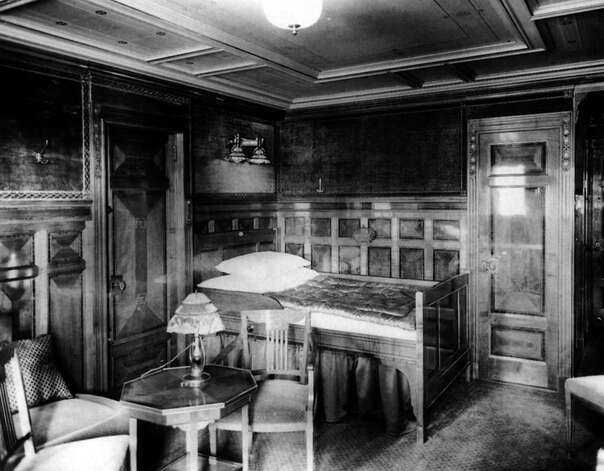
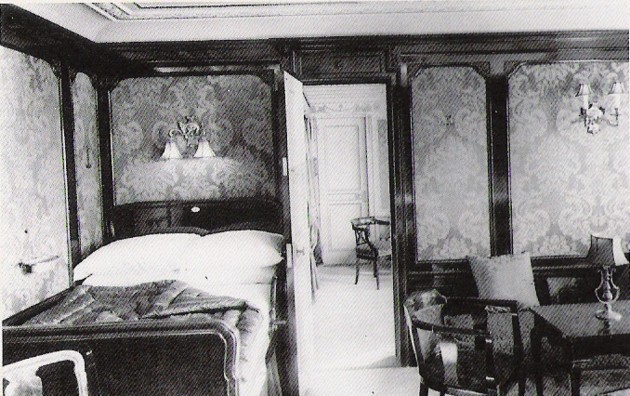
First class accommodations on the RMS Titanic; undated
I finally went to the history section in my library, which to say the least, was pathetic. But I was able to get a few good books, including The Wreck and Sinking of the Titanic, The Ocean's Greatest Disaster. Now I've only just begun reading it, but it is rather interestingly written. It was originally published in 1912, so not long after the sinking. The wording is interesting, and a little rough to understand at times. It just goes to show how much our language was changed in a mere decade.

Let's start off with a few simple facts that I've learned thus far. Now many people know at least a little bit about the RMS Titanic. Before I started reading I just new that the Titanic hit an iceberg and lots of people died because of lack of boats. I don't know if this is true, but I somehow learned that they didn't put on enough life boats because it cluttered up the side of the ship and made her not look as nice.

RMS Titanic

One thing I've learned is that all the Titanic's passengers had great faith in her, and didn't believe they were in any danger until the boilers exploded, causing the ship to tilt so steeply that people started to fall to their deaths. It's kind of funny. People thought it was impossible for the Titanic to sink, and yet on her maiden voyage she did just that. Rather ironic, don't you think?

Until I started reading about the Titanic I never though of it as a story of hero's. I was reading that when they started getting into the life boats there was no chaos, or pushing to the front. They loaded all the woman and children first, and brave hero's stayed behind, sacrificing themselves for the lives of others. They didn't know these people, and yet they chose to stay. That is a hero in my mind, and so it should be.

Recent photo of the Titanic
At the time, the Titanic was the largest ship ever built. I suppose that is a factor in why people though she wouldn't, or couldn't, sink. The ship was 883 feet long, and left on her first and last trip on April 10th, 1912, only two years before the start of World War I. It was four days later, at 11:40PM ships time, that she struck the iceberg. It tore a hole in her, and the water crept up to the boilers. If the icy water had not reached the boilers, causing them to explode, then it's quite possible that the Titanic would have survived, and a great many lives would have been spared. Alas, it was not to be.